
Upholstery Ins and Outs: Why Your Sofa Cushions Sag (and The Simple Fix I Use Every Day)
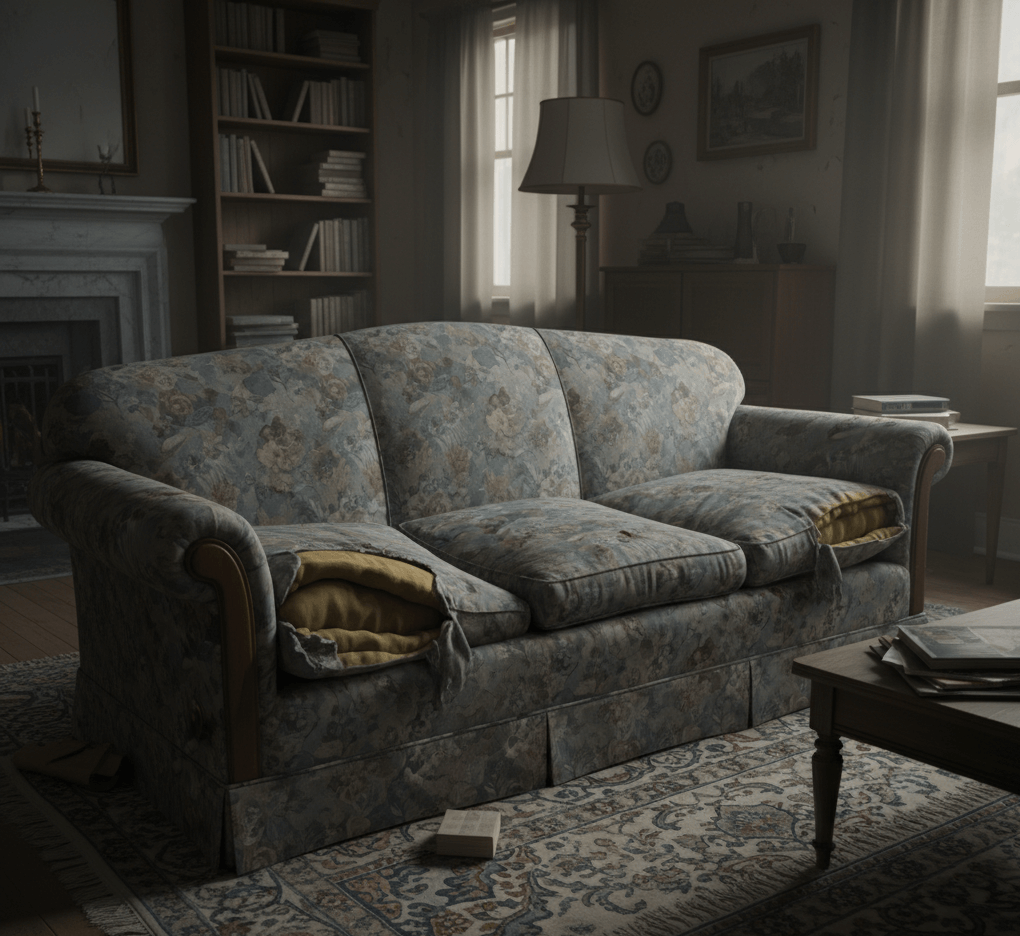
If you’re anything like me, you have that one spot on the sofa, the spot where the cushion is always a bit flatter, a bit less supportive, and frankly, a bit annoying. This common issue is what we in the trade call ‘The Sag,’ and it can make a beautiful lounge suite look tired and feel uncomfortable.
I’ve seen thousands of saggy cushions. The brilliant news? The sag is almost never the fabric’s fault; it’s a structural issue that is 100% fixable.
Here is an upholstery insider’s look at the three main reasons your sofa cushions sag, and exactly how a professional like me addresses the problem for good.
1. The Real Culprit: Foam Density Failure (The Invisible Problem)
This is the number one reason I see cushions fail. Over time, foam loses two key properties: Density and Resilience.
- Density: This refers to the weight and structure of the foam. Low-density foam (found in cheap furniture) simply can’t support weight for long.
- Resilience: This is the foam’s ability to “spring back” after you get up. When the resilience goes, the cushion stays permanently compressed, leading to the dreaded sag.
My Professional Fix: I always recommend replacing the old, broken-down foam with High-Resilience (HR) or High-Density (HD) foam. This is the secret to a comfortable, long-lasting sofa cushion repair. HR/HD foam is far superior to standard foam, engineered to spring back perfectly every time and keep your cushions looking crisp and supportive for years of family life.
2. Suspension System Failure: The Underpinning
The foam rests on the internal suspension system (the base of the sofa). If this system fails, the cushions have nowhere to go but down.
In South African furniture, we often see issues with:
- Stretched Webbing: Elastic webbing (strips of fabric across the frame) can stretch and lose tension over years of use, creating a hammock effect.
- Damaged Springs: Coil springs can break loose from their ties or bend, causing a localized sag.
My Professional Fix: We don’t mess around here. I inspect every spring and every strip of webbing. Broken springs are re-tied or replaced, and stretched webbing is replaced with new, high-tension webbing, effectively giving your sofa a new “spine.”
3. The Missing Puff: Cushion Wrap Loss
Sometimes, the foam is fine, but the cushion still looks deflated. This is usually due to the loss of the cushion wrap. This thin layer of polyester fibre or Dacron surrounds the foam core and gives the cushion its soft, smooth, rounded appearance.
My Professional Fix: If the core is solid, a simple cushion re-wrap is a miracle cure! I carefully open the cushion and wrap the core with a fresh, generous layer of high-loft fibre. It’s an easy job, but it restores the “puffy,” showroom-fresh look instantly and eliminates those wrinkles.
Don’t Just Cover the Sag—Rebuild It!
When you notice a sag, it’s a sign your sofa needs a proper, structural intervention. By fixing the internal issues with quality materials like HR foam, you are maximizing the life and comfort of your furniture. It’s about doing a professional reupholstery job from the inside out.